Next event
Free online Satsang
Monday 23 NovemberOnline
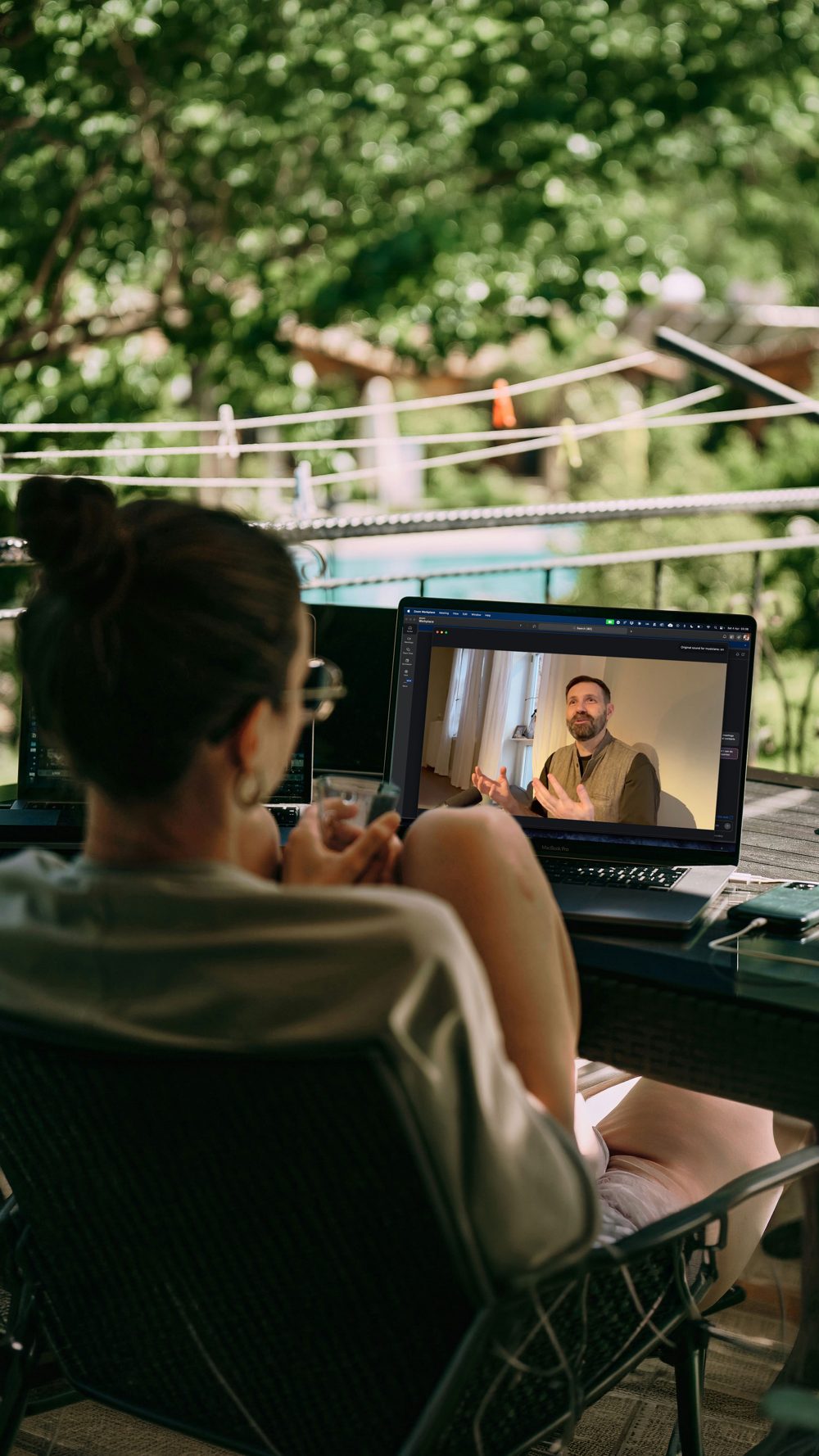
I would like to invite the whole community to a free online Satsang. There will be a guided meditation and Q&A. Sign up for a free Patreon account to access the Zoom link. Warmly welcome!

Next event
Monday 23 NovemberOnline
I would like to invite the whole community to a free online Satsang. There will be a guided meditation and Q&A. Sign up for a free Patreon account to access the Zoom link. Warmly welcome!

Markus Atmananda teaches meditation and self-inquiry in Malmö, Sweden, and online.
What he shares does not rest on accumulated knowledge or a fixed technique, but on direct experience and honest inquiry.
Read his storyWhat to expect
A period of settling in. Attention is brought to the body, breath, and what is present right now.
A reflection or pointer is offered. Not a lecture. A direct investigation into identity, presence, and the nature of mind.
Questions are welcomed. Not scripted Q&A but real dialogue about what comes up in practice and in life.
Writings
Markus Atmananda on his own anxiety when he started meditating, why suppressing a feeling adds another layer, and why anxiety can be what makes you look.
What people say

I came to Satsang wanting growth, wanting to be a 'good' meditator. That 'I' is quite disappointed today. Instead I was shown what is already here, the love that is so close, so pervasive. I didn't expect the tears and the courage, and I saw how natural it became to sit with a dying man, grieve a dog fully, love my parents so dearly. Knowing I'm no longer a project to be fixed makes life so much more beautiful.

When I step into Markus's satsang, I often carry a subtle expectation. An idea that I am supposed to get somewhere, to understand something profound. But in Markus's presence, something else happens. There are no techniques to master, no conceptual mountains to climb. The "I-construction" that so desperately wants to turn life into a self-improvement project suddenly finds itself completely unemployed. It is a beautiful disappointment for the ego.
Through the wordless safety of Markus's presence, a doorway opens to a state of being that lies far beyond the ego's masks and defenses. In that stillness, I discover that what I was searching for was never a destination in the future. It was the love and the bottomless presence that is already here, just beneath the surface of my identification and confusion.

Markus Atmananda's teaching has helped me come into deeper contact with myself, by sitting in silence with him and through his intuitive understanding and guidance. In his presence I always feel deeply loved, embraced, and allowed to be as I am.
Meditation is not something invented. It is what you experience when you stop following thoughts. When you allow every emotion without resistance. There are many meditation techniques to break the habits of the mind, but presence itself requires no technique. It is the peace that remains when avoidance stops.
No. Meditation is not about controlling your mind. Control just creates more tension. Meditation is being with your thoughts without them controlling you. Thoughts are not the problem. The problem is that you are unaware that you follow them. In meditation, you don't fight the mind. You simply stop going with it. Thoughts will still appear. But when you are not following them, they lose their grip.
If you are sincerely willing to look at what is happening inside you, you are doing it right. Meditation is not a performance. The mind will want to evaluate and measure your progress. That is just what the mind does. But meditation is an exploration, not an achievement. What matters is your honesty and willingness to be present. A supportive community and an experienced teacher who reminds you of that is very helpful.
There is no fixed rule to begin with. Start with a little less than you think you can handle. You should be able to sit even on a day when you are tired. Over time, build up to thirty minutes in the morning and thirty minutes in the evening. Regularity is more important than duration. A short meditation every day will do more than a long one once a week. It is also important to come back to the recognition throughout the day that you can be aware of your thoughts and your inner experience. This does not require sitting down. It only takes a moment.
You can begin on your own. But there is a difference between learning a technique and understanding what meditation is really about. A technique can be learned from a book or an app. But the deeper dimensions of meditation are hard to access without guidance.